
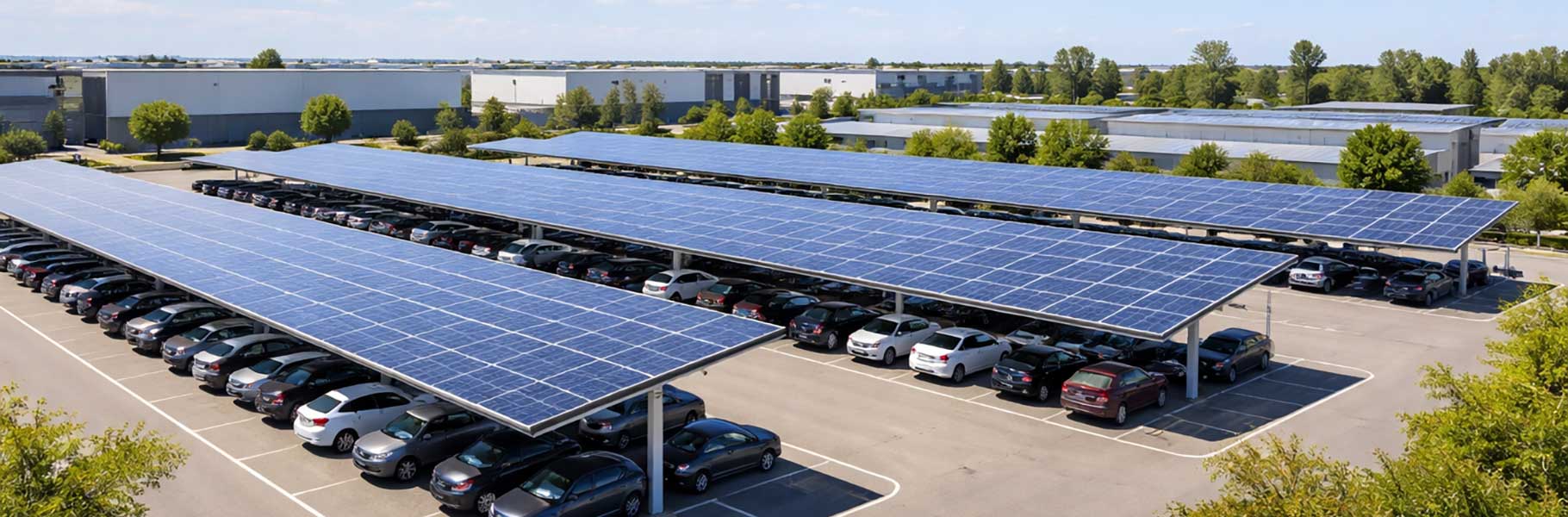
Why businesses start looking at their own power
Energy is a fixed part of running most industrial and commercial sites. It sits alongside wages, materials, and rent as a regular outgoing that cannot be avoided. When usage is high, even small shifts in cost or availability can have a noticeable impact on overall spending.
That is where on-site generation comes into the conversation. Instead of relying entirely on external supply, part of the demand is met locally. Sometimes this is driven by cost. Sometimes by reliability. Often it is a mix of both.
Before anything is installed, though, the financial side needs to stand up on its own. That is usually where the real decision is made.
Where the financial case can work well
For many sites, the strongest argument is simple. Electricity generated on-site is electricity that does not need to be bought. Where usage is steady during the day, solar in particular can line up well with demand.
Over time, that reduction in purchased energy can add up. The exact figures depend on how much is generated and how much is used directly, but the principle is straightforward.
There can also be some protection against price changes. Not complete protection, but a portion of energy costs becomes more predictable because it is not tied entirely to external pricing.
In some cases, there may be income from exporting excess energy, although this tends to be a smaller part of the overall picture for most sites.
The upfront cost and how it affects decisions
The main barrier is the initial spend. Equipment, installation, and associated work all need to be paid for before any benefit is seen. For larger systems, this can be a significant outlay.
That spend is usually weighed against the expected savings over time. This is often described in terms of payback, how long it takes for the system to cover its own cost.
Some businesses are comfortable with longer timeframes, particularly where the site is expected to operate for many years. Others prefer shorter returns and may be more cautious about committing capital.
Funding options can change the picture, but they also introduce their own considerations. The structure of any agreement needs to be understood clearly.
Matching the system to how the site actually uses energy
Not every installation delivers the same value. A system that produces energy at the wrong time of day, or in the wrong quantities, may not be used as effectively.
For example, a site that operates mainly during daylight hours may make good use of solar generation. A site with heavy overnight demand may see less direct benefit unless storage is part of the setup.
This is where careful sizing matters. Bigger is not always better. A system that closely matches real usage patterns tends to make more financial sense than one that is simply designed to produce as much as possible.
Ongoing costs and maintenance
While running costs are generally lower than buying energy from the grid, they are not zero. Equipment needs to be monitored and maintained, and components may need replacing over time.
These costs are usually predictable, but they still need to be included in any financial assessment. Ignoring them can give an overly optimistic view of the returns.
Where the case is less convincing
There are situations where on-site generation may not stack up financially. Limited space, unsuitable roof structures, or poor site conditions can all reduce output.
If a building has low or irregular daytime demand, a significant portion of generated energy may not be used directly. That can reduce the overall value of the system.
Short-term occupancy can also affect the decision. If a business is not planning to stay on a site for long, the payback period may extend beyond the time they expect to be there.
Planning and grid connection constraints can add cost or delay as well. These factors are not always obvious at the outset, but they can influence the final outcome.
Balancing cost, control, and long-term thinking
For some businesses, the financial case is clear. The combination of reduced energy purchases and long-term stability makes sense for the way they operate.
For others, the numbers are more marginal. In those cases, the decision may come down to how much value is placed on having part of the power supply under direct control.
There is no single answer that fits every site. The economic case depends on how energy is used, how long the site will be occupied, and how the system is designed to fit those conditions.
Like to know more?
Click the information button and we'll get back with suggestions and quotes.