
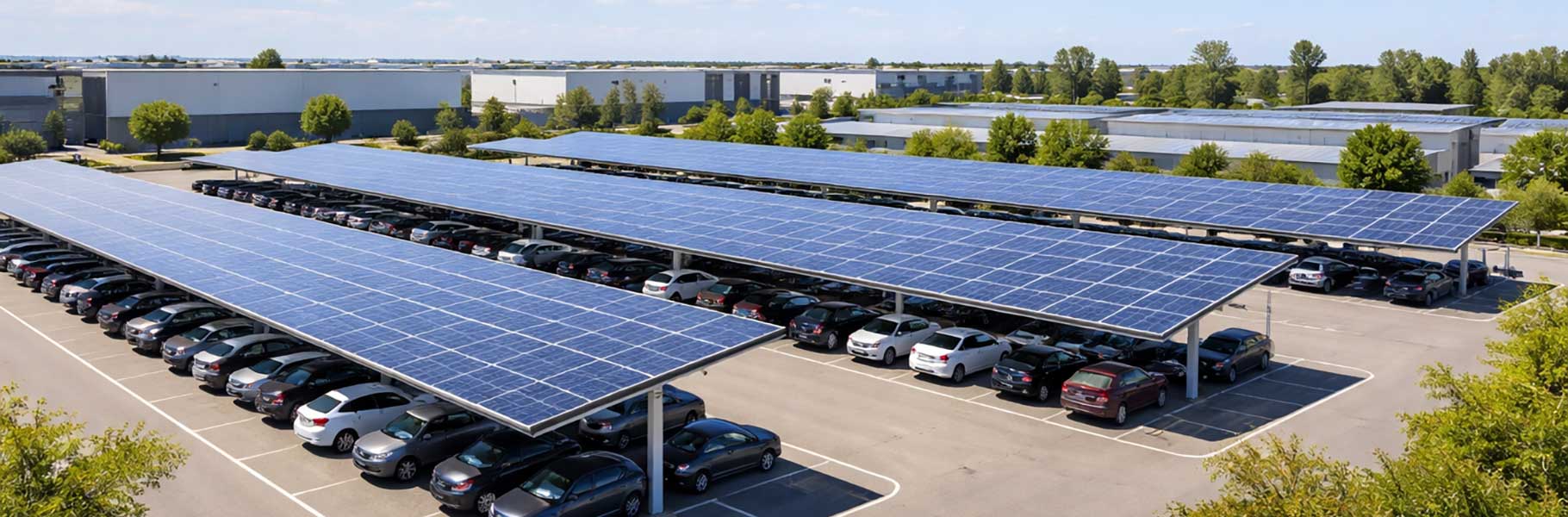
Warehouses and storage units
Warehouses tend to have long lighting hours, steady background demand, and the odd spike when loading bays get busy. Roof space is usually generous, which makes solar an obvious contender. It can cover daytime lighting and basic operations quite well, especially through spring and summer.
Battery storage can help here too. It smooths out those short bursts of demand when forklifts, doors, and systems all kick in at once. Without it, peak charges can creep up.
One thing to watch is timing. If most activity happens early morning or late evening, solar on its own won’t line up neatly with usage. That’s where a battery or a hybrid setup starts to make more sense.
Factories and production sites
Factories are a different animal altogether. Machinery starts hard, draws heavily, and doesn’t always run to a tidy schedule. Some equipment cycles on and off, others run continuously. It’s rarely predictable.
Solar can still play a part, but it’s usually only a slice of the picture. The bigger wins often come from combining systems. Battery storage helps absorb those sudden spikes. In some cases, a standby generator is kept on site as a safety net, especially where downtime is expensive.
The downside? Cost and complexity. These setups need to be sized properly. Too small and they struggle, too large and the return takes longer to show. It’s a balancing act.
Offices and commercial buildings
Office blocks tend to be more predictable. Lights, computers, heating, cooling, all ticking along in a fairly steady pattern during working hours. That makes them well suited to solar, particularly when paired with smart controls.
Heating and cooling often drive a large chunk of usage. Air source heat pumps are becoming more common here, especially in newer buildings or refurbishments. They can be efficient, but only when the building insulation is up to scratch. Otherwise, they end up working harder than expected.
One small detail that gets overlooked is standby usage. Systems left running overnight, screens, servers, background equipment. It adds up over time. Even the best energy system can’t fix waste that’s left unchecked.
Retail and hospitality spaces
Shops, cafés, and restaurants have a rhythm of their own. Peaks at certain times of day, then quieter spells. Lighting, refrigeration, cooking equipment, all layered on top of each other.
Solar can help during daytime trading hours, but refrigeration and storage often run around the clock. That means there’s always a base load to cover, even when the doors are shut.
Battery systems can take the edge off peak pricing, especially in the early evening when demand is high and tariffs tend to follow. Still, space can be tight in these settings, which limits what can realistically be installed.
Construction sites and temporary setups
Short-term sites bring their own challenges. Power might not be available at all, or only in a limited way. Generators are still common, simply because they’re quick to deploy and reliable.
That said, hybrid systems are starting to edge in. A mix of battery storage and smaller generators can reduce fuel use and noise. Solar can be added, though it’s usually secondary given the temporary nature of the setup.
The trade-off is upfront cost versus duration. For a site running a few weeks, simple often wins. For longer projects, a more efficient setup can pay its way.
What tends to work best overall
No single system suits every business. It comes down to how and when power is used, and what happens if it isn’t there when needed.
- Solar works well where there’s steady daytime use and decent roof space
- Batteries help manage peaks and reduce strain on supply
- Generators provide backup where downtime isn’t an option
- Heat pumps suit well-insulated buildings with consistent heating demand
Often, the best results come from combining two or more of these rather than relying on just one. That way, each part covers a different gap.
Want to explore what might suit your setup?
Use the enquiry button and share a few details about your site, we’ll come back with ideas that fit how your business actually runs.